Customer Stories
Vintage treasures meet digital tools: How Emily Krill grows her collage practice with ArtPlacer
Emily Krill rescues pieces of the past and gives them new life in her vibrant, large-scale collages. From her studio in Pittsburgh, she sources and reshapes long-forgotten paper ephemera, fragments of the past that once meant a lot to the people who created them: love letters, ledgers, blueprints, legal documents, and children’s schoolwork, all take a new form under Emily’s careful hands:
“I use papers as old as the early 1800s and as recent as the 2020s. I love the moment of discovery when a fragment sparks an idea, and then weaving it into something new that still carries traces of its history.”
Emily’s work bridges eras: centuries-old pieces of paper reworked through a mid-century modern abstract lens and brought into the present through digital tools like ArtPlacer that help reimagine how her work is shared, experienced, and collected. In our conversation, she shares how blending the past with the possibilities of today has helped her grow as both an artist and business owner.
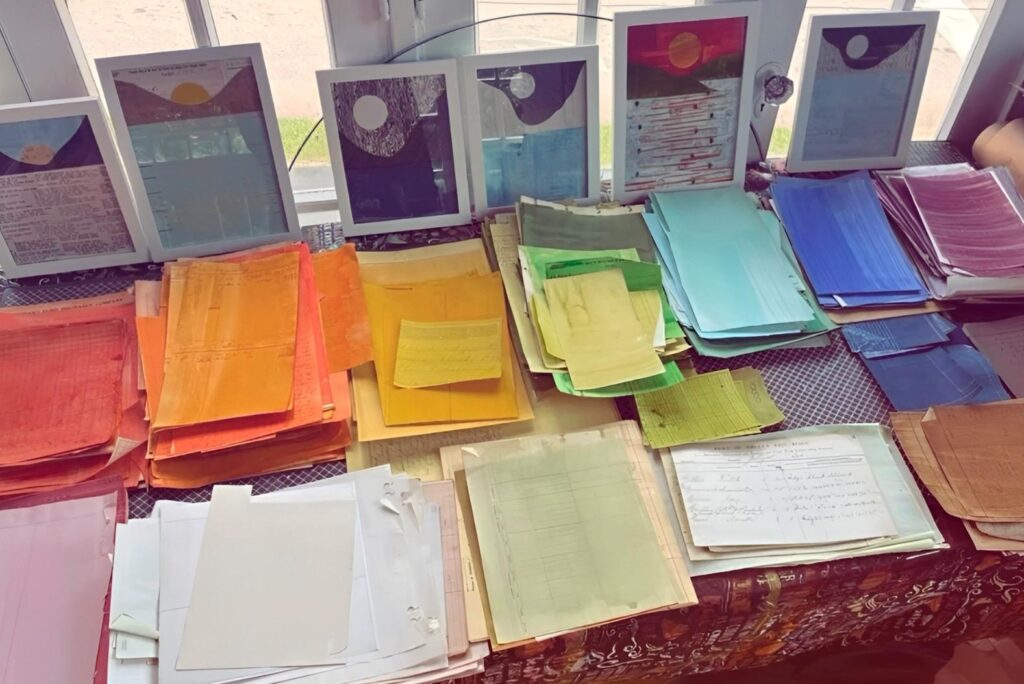
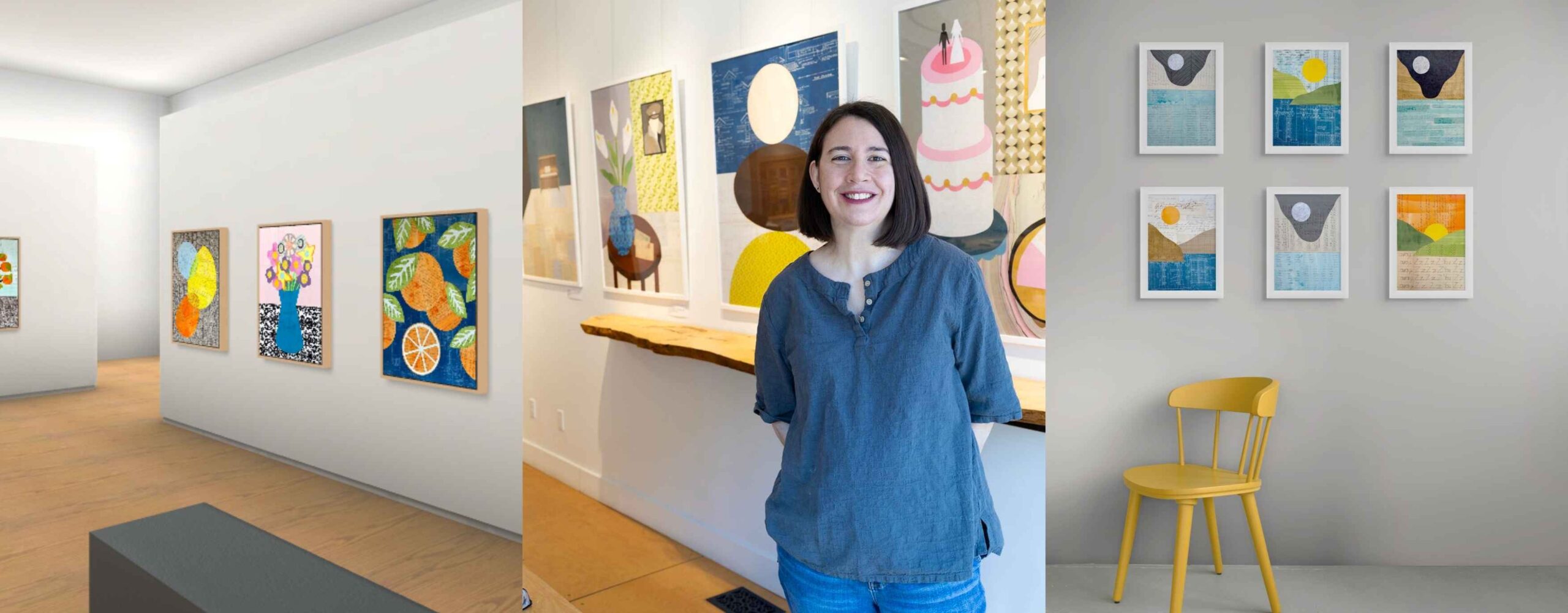
Emily Krill hunts for vintage paper (letters, ledgers, children’s schoolwork) and transforms it by inking, cutting, and pasting to create large-scale, whimsical collage artworks.
Contents
Turning forgotten papers into monumental compositions
Emily’s art career spans decades, and she’s been creating art and sharing it since she was a teenager. During art school, she studied painting, drawing, printmaking, video, and graphic design, but her practice has always been guided by a sense of space:
“No matter the medium, I always worked like a collagist, moving parts around until they fit together in a way that felt right.”
This interdisciplinary experience gives Emily a unique vision when it comes to creating art. In New York, she spent a decade working for an architect who specialized in converting old TriBeCa warehouses into lofts, and even though her role was related to bookkeeping and handling numbers, she was able to learn from the architects, designers, and builders transforming historic spaces and bring those insights into her work as an artist:
“Watching how they preserved original details while creating something new deepened my appreciation for old materials. That perspective is now central to my collage practice.”
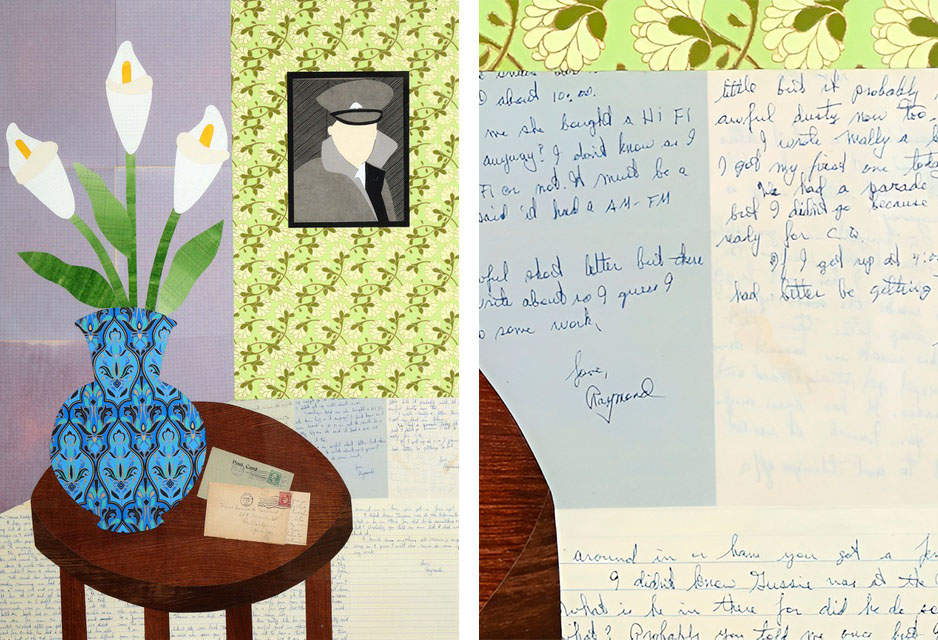
The papers themselves guide the story the piece tells, as seen in Emily’s piece “Love, Raymond”. The large scale of her pieces (left) allows the intricacies of the paper to be revealed up close (right).
Your pieces have a strong sense of narrative. How do you find these stories? Do they come from the materials, or do you find the materials to tell the story?
The stories almost always begin with the paper. When I sort through old documents, I look for details that stand out, like a doodle, a shade of ink, or handwriting that feels especially alive. I’m not trying to tell the literal story of the person who wrote it, but I use those fragments as raw material for something new.
One example is a collage called Love, Raymond. It’s a still life of an ornately patterned living room. On a table sits a postcard and a letter dated 1917. A photograph of a WWI soldier hangs on the wall, and the floor is made from wartime letters home from a man named Raymond. A vase of calla lilies stands beside the correspondence, with their connotations of youth, purity, and sometimes death.
So, the narrative flows from the materials but remains open to interpretation. Even when I start with a theme in mind, the paper itself guides me. Each series has a certain shape, but each piece becomes its own little world.
How do you source the materials, and how do you transform them?
I have a paper dealer who finds these treasures for me. There’s a whole community of people who collect what’s called “paper ephemera”, meaning everyday documents that were never meant to last but somehow did.
I transform the papers by painting them with vivid ink, then cutting, layering, and pasting them into mid-century modern–inspired compositions. From a distance, they look simple, but up close, they reveal their intricacy.
Why do you work on big canvases?
The scale allows antique paper to show its full richness. On a large surface, handwriting, textures, and tiny marks come forward, and the work takes on a presence that fills the space. I want people to step back and take in the design, then come in close and discover the small, intimate details. Scale elevates old scraps of paper into something monumental.
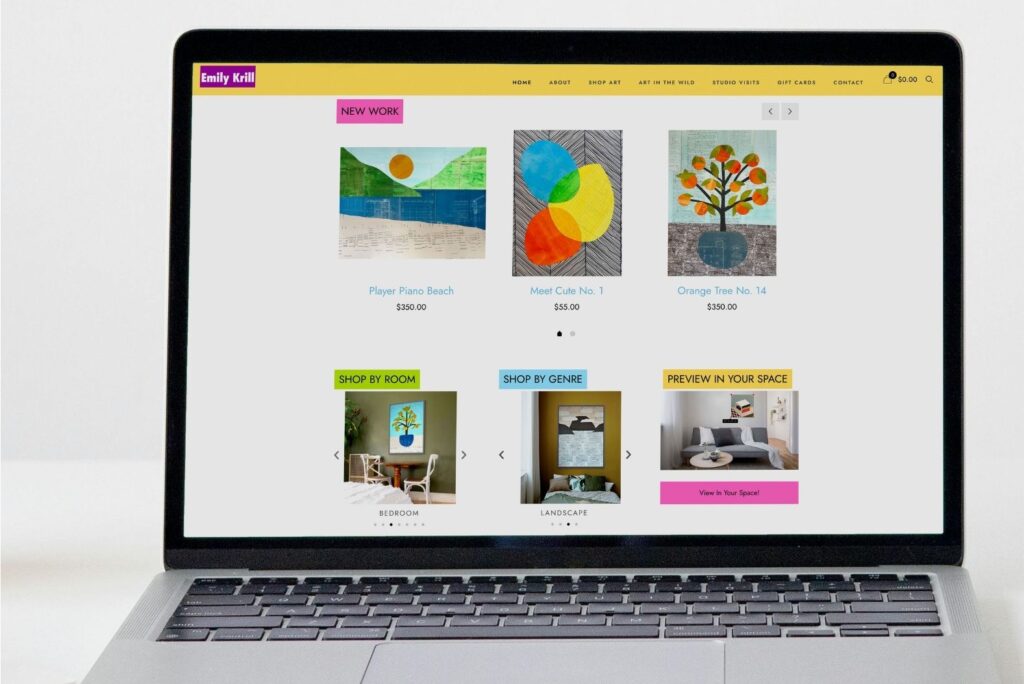
Emily’s use of the ArtPlacer Widgets helps collectors see the work in place, creating a solid buyer’s journey that increases sales.
The business of being an artist
Emily currently makes her living as an artist, combining freelance graphic design work with art sales, whether through interior designers, art fairs, or direct commissions. When it comes to making art a career, her philosophy is simple: be scrappy. “Keep good records, manage your own website, and don’t shy away from talking about money”, says Emily. She emphasizes the importance of reaching out to people and letting them know you’re interested, even if it means sending cold emails: “Every opportunity I’ve had to show my work has come from putting myself out there.”
A key part of Emily’s business plan is the use of digital tools. For her, being able to connect with people beyond Pittsburgh has been essential, and digital tools have allowed her to present her work more clearly, whether through mockups, proposals, or promotional materials, and truly expand her business:
“This past year, I’ve been showing more and reaching wider audiences, and ArtPlacer has made that possible. Their tools give collectors a way to see my collages in context. A simple JPG tells you nothing about size or presence, but a Room Mockup makes the work feel immediate and real.”
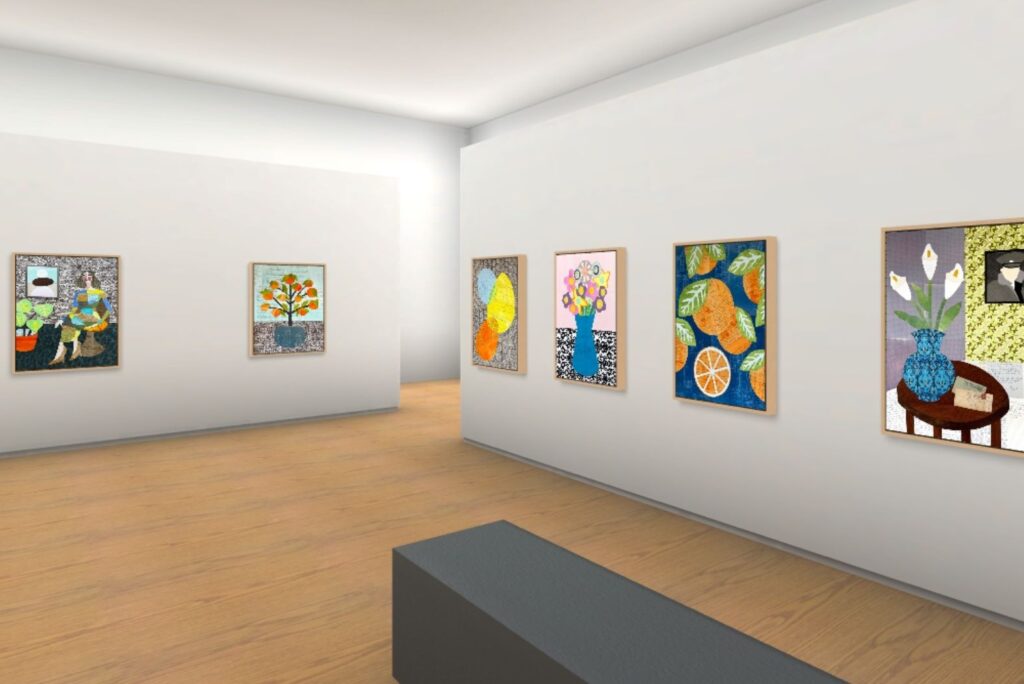
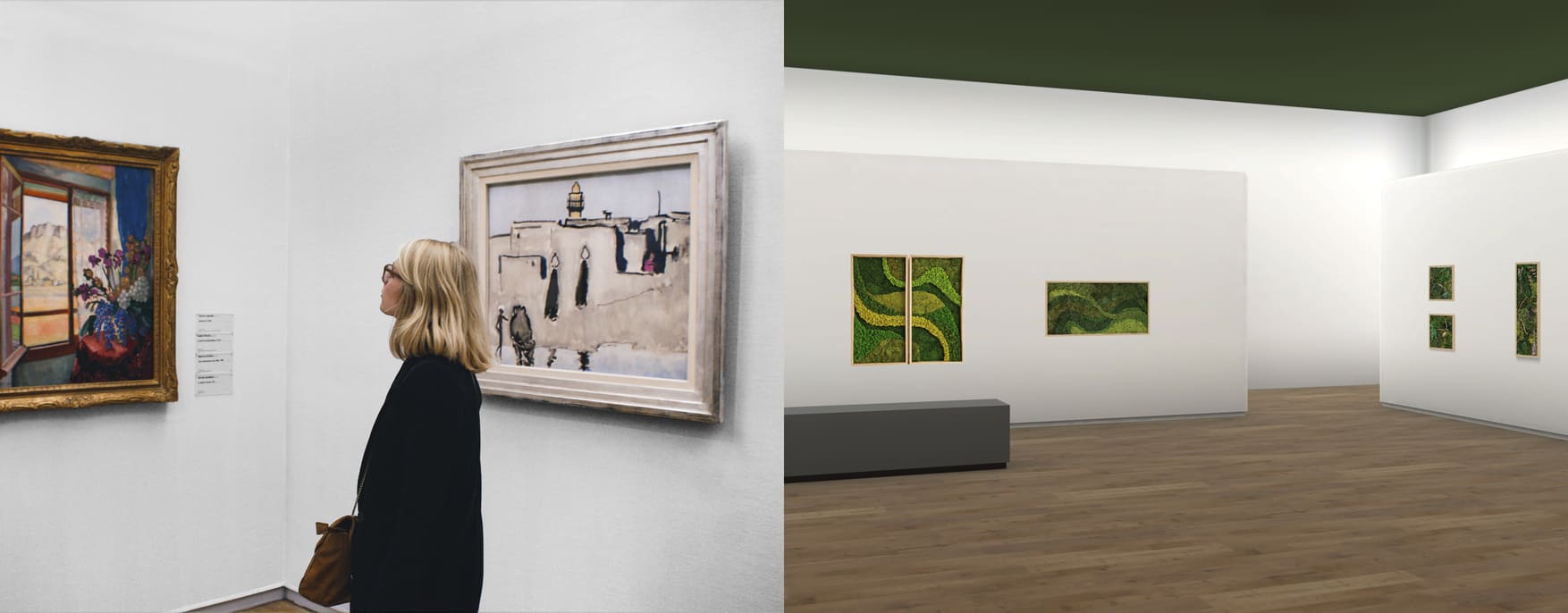
By hosting a Virtual Exhibition on her About page, Emily invites visitors and potential collectors to experience her pieces from up close and personal.
The sense of connection and tactile experience Emily wants to create around her pieces comes to the forefront with a beautifully curated Virtual Exhibition. Visitors to her website get to view her pieces in a gallery setting, getting close to each artwork and being able to appreciate the intricate details and textures of her paper treasures:
“I added the Virtual Exhibition to my About page because I wanted people to experience my work, not just read about it. My collages are large, and the virtual space helps show their scale and presence. I picked pieces that represent the range of my work and then arranged them until the flow felt right. It’s part storytelling, part intuition: giving visitors a sense of both the history in the papers I use and the joy in the colors and compositions.”
Emily’s pieces express a real fondness for the analog past and an exploration of how its ephemeral traces can become a part of our daily lives. Through the ArtPlacer suite of tools, this appreciation can take the form of a sustainable business, even in a digital world:
“I am a big planner, so I most often use the Room Mockups, Personal Spaces, and Art Show Planner. Each one does something a little different, and all of them are invaluable.”
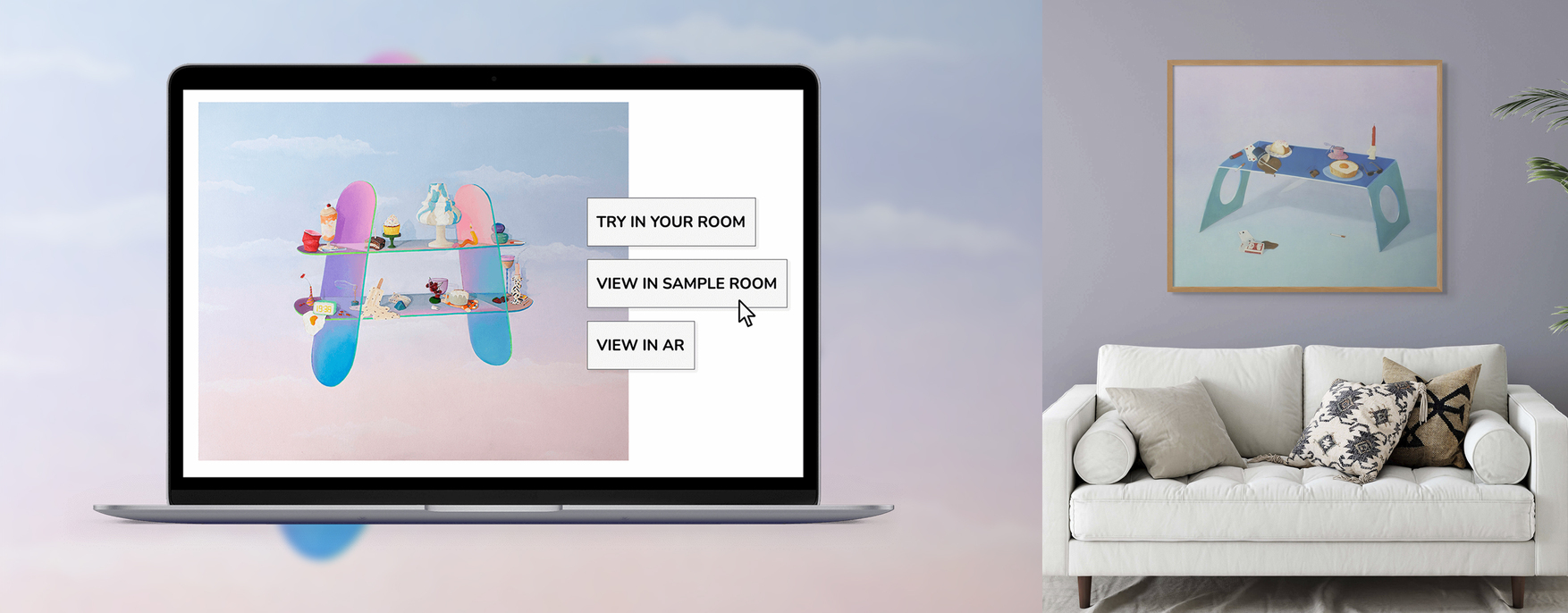
There’s no recipe for selling art, so creativity can come in handy, and Emily’s use of ArtPlacer Website Integrations are a great example of how you can implement the tools into your business. Emily uses the Sample Room Widget to generate more sales online. This tool allows you to display artworks at scale in the Room Mockups of your choice, and Emily places it on the homepage of her website to guide the shopping experience. She gives visitors the option to shop by room or by genre of artwork, and redirects them to curated collections within her online store:
“The Room Mockups help people imagine scale and placement. I also sell my work through Artful Home, which requires mockups for every listing, and ArtPlacer’s realism makes them far more effective than cheaper apps.”
She combines this with the Client Room Widget for a three-pronged approach to supporting the buying journey of her potential collectors straight from the homepage. This widget enables visitors to upload a photo of their own room to display the selected piece and get a visual of how it would fit their space. For Emily, this has been a game-changer because, as she puts it, seeing the piece through the widget “Gives people a lot of confidence that the work is gonna look good in their space”.
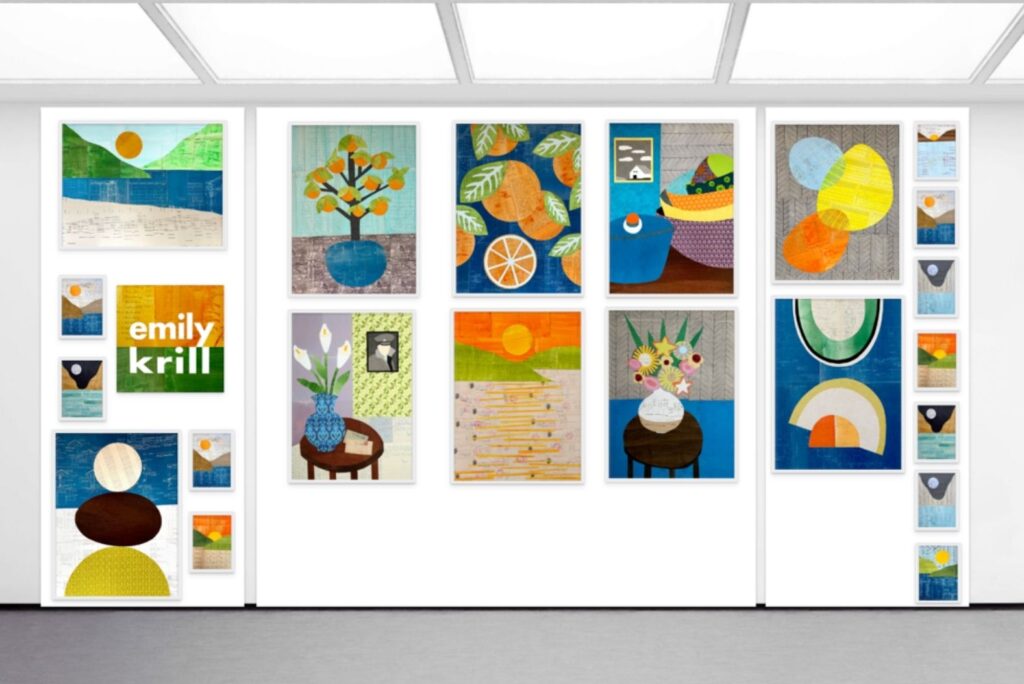
Emily creates layouts with Art Show Planner, which makes it easy to prepare for exhibitions and art fairs in advance, saving time, stress, and resources.
For artists handling commissions, keeping communication with clients clear and personal is key. Giving clients a way to visualize a piece in their own space can transform the experience, not just helping close a sale, but making discussions about adjustments and creative ideas far smoother. Personal Spaces is the tool to make these conversations happen, and an important part of Emily’s business strategy:
“The Personal Spaces feature is especially useful for commissions. Being able to drop options into photos of a client’s room makes the process smoother and helps everyone feel confident about the decision. For designers, it shows how the artwork interacts with colors, textures, and furniture. Without ArtPlacer, I would be doing all of this manually in Photoshop, which would take much longer.”
Personal Spaces also takes the guesswork out of planning a show. By uploading a photo of the gallery space where you’ll be showing, you can see your curation ahead of time, experiment with layouts, maximize the gallery space, and present your work at its best. This is exactly how Emily approached her latest in situ exhibition:
“I used Personal Spaces to plan my last gallery show. I photographed the blank walls, uploaded my collages, and arranged the whole show virtually. I generated several mockups before I landed on the final layout! But all that planning meant my actual installation took just a few hours.”
Don’t have a photo of the gallery space? No need to worry: Art Show Planner helps you map out shows with precise wall and artwork dimensions (no need for photos or sketches), creating professional layouts in just a few clicks:
“I’ve also been using the Art Show Planner to design my booth for The Other Art Fair in Brooklyn. It lets me test arrangements, play with spacing, and even plan where to stand and greet visitors. By the time I get to the venue, I’ll already know exactly how everything should look.”
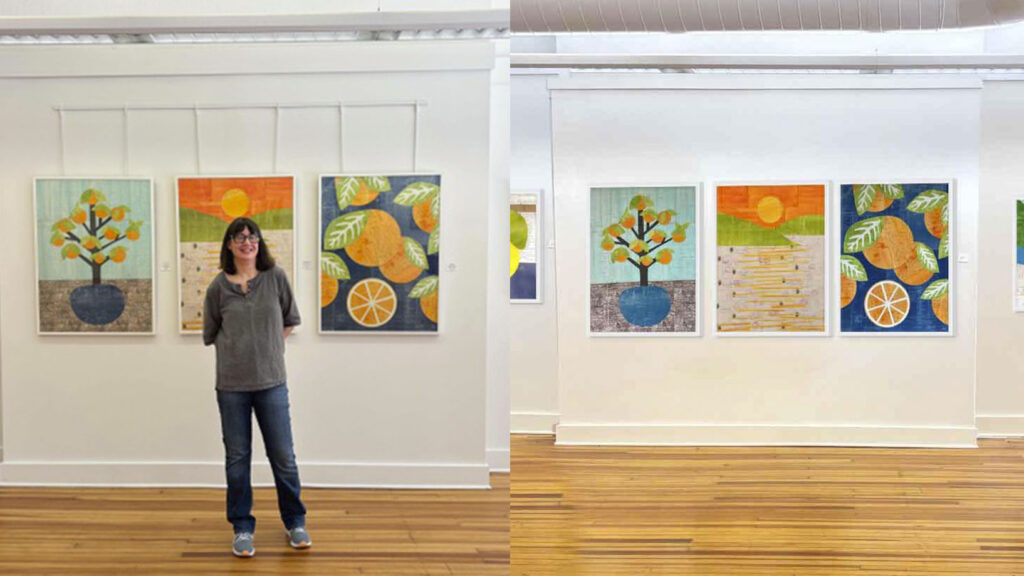
Emily planned her in situ show using Personal Spaces to find the perfect arrangement for the pieces.
Preserving family treasures and extending joy
Rooted in history yet always looking ahead, Emily’s practice continues to grow, from local exhibitions to personal commissions that transform family archives into art.
What are your next projects and where can we find you?
Right now I am showing in Color Stories, a two-person exhibition at Atithi Studios in Pittsburgh that runs until September 13.
I am also working on commissions where I transform family papers into large-scale, personally meaningful collages. It’s a way for people to keep their family history close through art.
I always say art should be like the City of Pittsburgh: livable. It should be something you can look at every day and still find joy in.
Editor’s note: This interview has been edited for length and clarity.