Customer Stories
The art of the fair booth: curation, conversation, and connection with Lynn Savarese
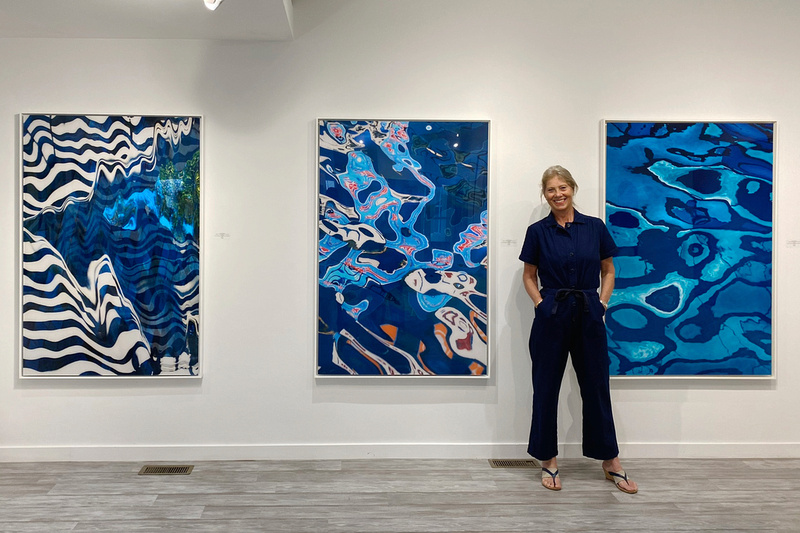
Lynn Savarese is a New York-based photographer. She came to photography later in her life, following careers in law and banking, and was quickly captivated by the possibility of interacting more intimately with the natural world through her camera lens. Now, more than a decade later, her work has received prestigious awards and been exhibited around the globe, and Lynn has enjoyed collaborations with both private and institutional clients. But she’s still hungry to see, capture, and share more:
“Often, I think, we see without seeing. As a photographer, I seek out perspectives that encourage one to pause and look anew at something.”
ArtPlacer caught up with Lynn to find out how she thinks about photography, how she chooses her subjects, and why art fairs are paramount to her art practice. Keep reading to learn more!
Contents
Why the best photos start with a feeling
Lynn’s work is often focused on elements from the natural world, and water, especially, is a continuous source of wonder and inspiration for her:
“One of my favorite subjects to explore is water, in all of its many manifestations. From violent ocean surf and tumultuous waterfalls to gently lapping waves, rippling rivers, mirroring lakes, and noble icebergs, water assumes countless roles and conveys a vast range of feelings.”
Through the incessant pursuit of this subject, Lynn has crafted a particular way of looking at water and capturing it in many forms, imprinting her photographs with a deep sense of emotion that invites reflection.
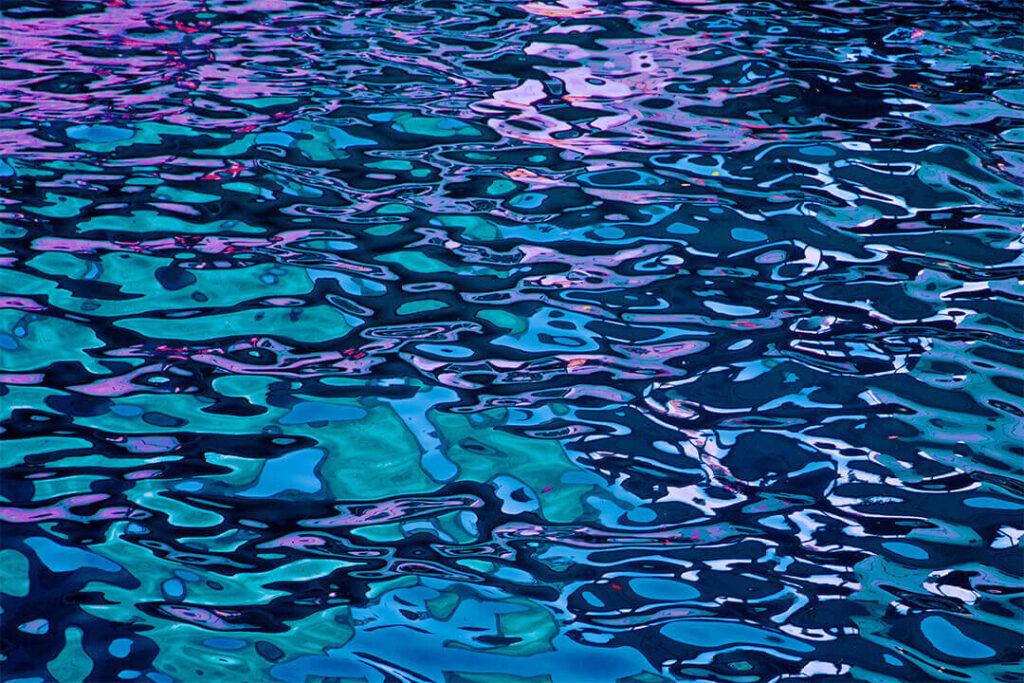
Water has remained a constant subject of Lynn’s photography, and she aims to capture its impressionistic qualities.
You’ve mentioned wanting to capture “nature’s many abstract renderings” and water’s “reassurance and drama”, and you seem to find both in close perspectives with severe framings — why? What happens when we look up close?
As the supreme sculptor of our planet as well and the most mysterious and magical element in the universe—vital to all life while offering no nutrients; breaking all rules governing other liquids and solids; eternal in age while dissolving all other matter with time—water is endlessly beguiling to observe, while also engendering a wide range of emotion, from reassuring meditative bliss to deadly terror.
Although I sometimes aim for representational photo-realism, I tend to have a stronger preference for capturing images with strong painterly aspects. I am especially enchanted with how water, with its penchant for distorting light and color and shapes, often presents itself impressionistically and even abstractly. I also tend to seek out images that metaphorically convey my own feelings, while also offering transcendence into something else.
Several years ago, a dark period in my life prompted me to travel to Iceland in search of powerful expressions of rage, which I hoped to find in that country’s famously tumultuous waterfalls. And while I felt that I succeeded in this pursuit, in that I captured images portraying fearsome and even cataclysmic tumult, it also turned out that I experienced—quite unexpectedly—a profound cathartic joy and awe alongside these waterfalls, which I came to want to convey as well. And on a recent trip to Greenland, I found myself striving not only to capture the purity, bravery, and fortitude of its mighty icebergs, but also the sadness evoked by their inevitable melting and lonely demise.
Photography offers up endless possibilities for capturing “truth” and “reality” while also leaving the image-maker with plenty of latitude for creative input and more complex and layered expression.
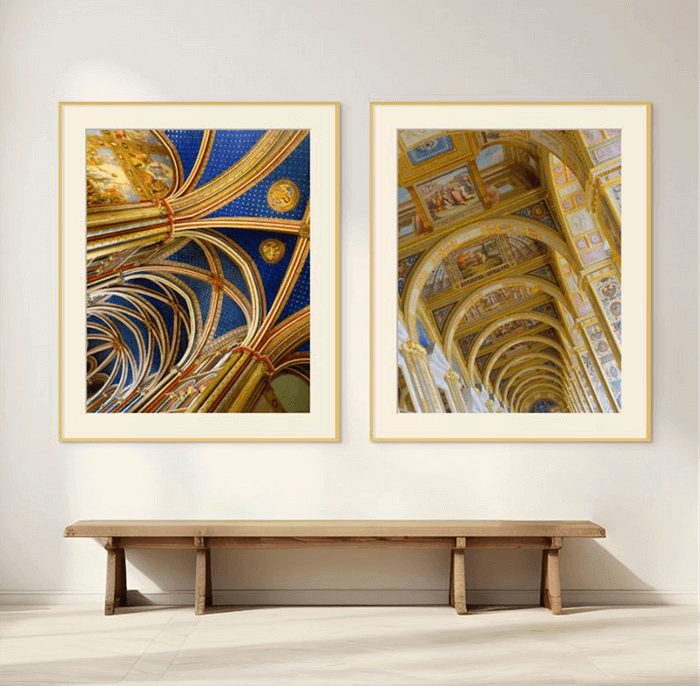
Lynn displays two photographs of her “Tipping Points” series in a Room Mockup that helps highlight the pieces.
Though nature remains her main focus, Lynn has also turned her camera towards architecture, museum objects, and people. Her process, and the resulting pieces, are profoundly concerned with people and how they relate to the world and each other, which she explores metaphorically in her work.
With “Tipping Points,” you manage to go from water to complex man-made structures and create the same feeling of gazing deeply into a small portion of a larger something — did you approach the work in the same way? What caught your attention in those beams and cupolas?
With “Tipping Points,” I aimed to portray man-made architectural treasures at their most complex, aspirational, and magnificent, while ’tilting’ the structures at such dangerous angles as to suggest their imminent downfall and collapse. The images in my “Tipping Point” series are meant to be metaphorical, as we experience the real possibility of tragic demise of many of our most beautiful and aspirational man-made creations—from our country’s constitution and democratic system of governance, to our institutions dedicated to art, science, invention, and the preservation of knowledge and history, to our ambitious and complex infrastructure for delivering vital goods and services to all.
As a photographer, you’ve also been involved in several projects to help raise awareness around particular issues that matter to you, from your work with museum objects and non-profits (against human trafficking and for fostering the arts, for example) to the “Kids of NYC” series — do you think photography has a social role?
Photography can be a powerful tool for promoting social justice. As a lawyer, I spent a number of years using my legal skills to advance systems of fairness and promote fundamental human rights, especially for the least powerful and most vulnerable among us. As a photographer, I seek to expose injustice through the intimate portrayal of some of the least powerful and most vulnerable among us, whether they be survivors of sex trafficking or women selling their bodies in high-risk commercial surrogacy transactions to provide for their own children. My “Kids of NYC” project, on the other hand, was undertaken to relieve the empty-nest sadness I felt after my children left for college. I so enjoyed spending time with young New Yorkers from diverse backgrounds, and portraying them and their stories entirely on their own terms and under their direction.
Increasingly, youth today rely on photos more than words to convey messages and stories on various social media platforms. Images, unlike words, offer up a universal language. Given its increasing importance, I think photographic image-making should be taught in schools alongside the alphabet and grammar. Photography’s power both to reveal and convey truth —and to manipulate and deceive— should also be taught, as well as its ethical implications.
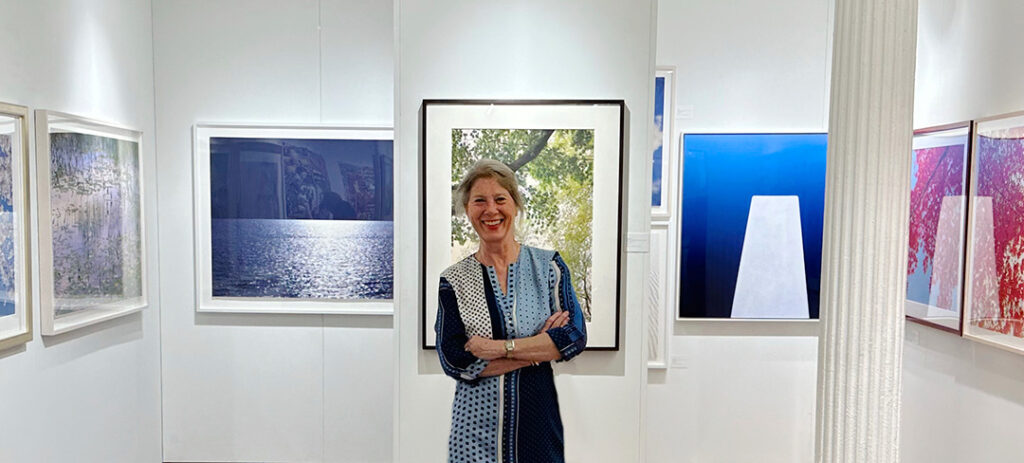
Art fairs are an essential part of the artist business, from finding your audience and making lasting connections, and ArtPlacer helps you prep and navigate fairs like a complete pro.
An artist’s guide to art fairs
An avid traveller, Lynn often takes the opportunity to visit art fairs when visiting new places, to enjoy the art but also as a learning experience:
“I love visiting art fairs! Almost every November I head to Paris to see the magnificent Paris Photo exhibition at the Grand Palais. I’ve also spent days wandering through Art Basel Miami Beach and Miami Art Week’s many satellite fairs, as well as NYC’s several major photography fairs. Not only do I find artistic inspiration at these fairs, but I also learn a great deal by paying careful attention to how images are presented—the framing, matting, glass, paper, and other materials and production methods used.”
Participating in art fairs is vital for Lynn, not just as a means to exhibit her work and meet other artists and collectors but also as an opportunity to elevate her own art practice:
“Working with a finite amount of wall space forces me to develop stronger curatorial skills in the selection and production of my prints, as every square inch counts.”
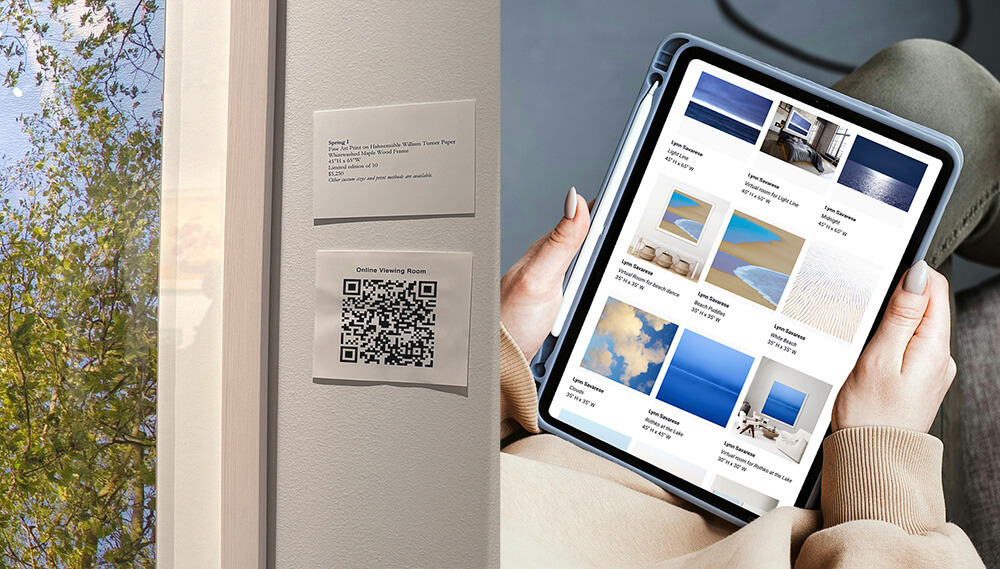
Lynn used ArtPlacer to create her Online Viewing Room, which gives collectors an elegant, elevated view of her work, directly accessible through QR codes.
What do you find matters most during the fair? How do you connect with people who come to your booth? Do you have advice around having one-on-one conversations about the work with visitors?
An exhibitor’s most important job is to curate prints carefully so that each stands out individually while also complementing its neighbors. Avoiding overcrowding by giving each print ample wall space is also very important: a beautifully curated, well-lit, and tidy booth is key.
I am not a gifted salesperson and have trouble with overt pitches, but I very much enjoy hearing viewers’ impressions of my work and sharing personal stories behind the images when asked. I also like to ask viewers if they have a particular space in mind that they’re hoping to find art for, and I often remind them that one of the advantages of a photographic print over a painting or drawing or some other one-of-a-kind piece of art is that I can offer it in custom sizes and custom crops, using any of a variety of papers and production methods, to best accommodate a collector’s particular preferences. Some would look down upon this kind of collaboration and accommodation as demeaning to the art, but I very much enjoy engaging in this creative process with my clients.
Turning visitors into collectors
Meeting people is only the beginning: you have to turn them into collectors, and for that, staying in touch is key. Lynn’s use of ArtPlacer’s Online Viewing Rooms helps her keep the conversation going. These microsites enable you to curate a selection of pieces, add their information, and include your bio and contact details. Then, you can generate QR codes that take you straight to each of the artworks. For art fairs, Lynn not only created her own Online Viewing Room, she also prints the codes and adds them next to each photograph. No need for paper notes that easily get lost: scanning the QR code means visitors have your info right in their phone, straight away.
How do you extend the contact beyond the first interaction? What are things you should keep in mind when marketing your work and yourself as an artist?
The use of Online Viewing Rooms and Room Mockups can be very helpful, in being able to show potential clients how they can easily view my prints online, and also what a print might look like when virtually installed in a specific space. I also encourage visitors to my art fair booth to jot down their name and email address in my guest book so that I’m able to invite them to future art fairs and other venues exhibiting my work. Visitors will also sometimes jot down questions and special requests in the guest book, which allows me to extend contact with them beyond our interaction at the fair.
I am also a big fan of encouraging anyone who enters my booth to help themselves to high-quality postcards and business cards that feature a variety of my images, as well as my contact information and how to access my website and Instagram account. And for visitors who show a special interest in my work, I also give out high-quality booklets featuring every print on display in my booth, as well as my artist statement and biographical information. These are expensive marketing materials, but they seem to pay off quite handsomely, as the majority of my sales take place after the art fair comes to an end, and sometimes years after a collector first saw my work at a fair.
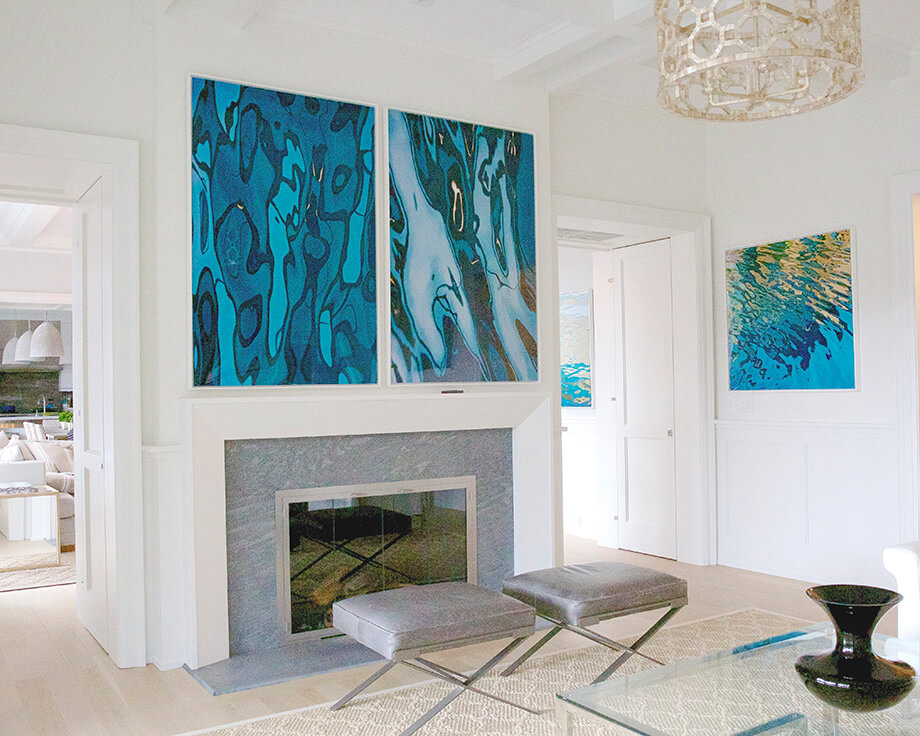
Three of Lynn’s pieces from her Water series, proudly presented in a beautiful home.
Looking ahead
Lynn is always on the move, travelling, taking photos, and experimenting with new formats like handmade books and custom wallpapers. We asked what’s next for her and what projects she’s excited about and she told us that:
“My camera remains my best friend and I’ll continue taking it with me on daily excursions and travel adventures, as wonderful images can turn up at any time, anywhere. So much of my art is pure serendipity! And while I will always keep photographing water as I find it endlessly fascinating, I also have some other subjects that I’d like to turn into completed series—gargoyles, flowers, Central Park trees, and perhaps intimate self-portraits.”
Editor’s note: This interview has been edited for length and clarity.