Features
Build a standout artist’s online portfolio: how to make a professional art portfolio online
An online portfolio is an artist’s digital calling card: the place where your artwork, your voice, and your professional identity come together. It’s often the first impression collectors, curators, and buyers get of you, long before they meet you in person. That’s why learning how to make a strong artist portfolio is essential.
A portfolio is more than a gallery of images. A well-structured portfolio helps people find you, understand your practice, and trust your professionalism. It anchors your presence across the web, works for you around the clock, and opens doors to new audiences and opportunities.
In today’s art world, where visibility and credibility go hand in hand, a thoughtful online portfolio is essential, so in this guide, we bring you artist portfolio tips and how to create your own.
Contents
What should an artist include in an online portfolio?
A polished online portfolio requires intention. Many creators create beautiful work yet overlook the fundamentals of presenting it clearly online, and when the basics are missing or poorly organized, even the most impressive pieces can come across as less professional than they deserve. A few thoughtful adjustments can completely shift how your practice is perceived, making it easier for viewers to understand your work and take you seriously.
Start with a clear structure
Let’s take a look at how to structure an artist portfolio. The most effective ones follow a simple, predictable flow. Visitors want to understand who you are, see your work, and know how to reach you. A brief introduction sets the stage, but it shouldn’t overshadow what people came to see: the art itself. Getting into your work quickly keeps the experience focused and respects the viewer’s time.
A strong structure usually includes:
-A short introduction or artist overview
-Your body of work, grouped or presented in a way that feels coherent
-Clear contact information or next steps
This straightforward approach helps people navigate easily and gives your art the space it needs to make an impact.

For your artist statement, tell your visitors who you are as an artist and what you want to communicate with your work.
Presenting yourself clearly
Once the structure of your portfolio is in place, the next step is shaping how you introduce yourself. The goal of the introduction isn’t to oversell yourself or adopt a voice that doesn’t feel like you; it’s simply to give viewers enough context to understand where your work comes from.
A good approach is to start with the essentials: your name, a short description of what you do, your location, and links to your website or social profiles. These details help ground your presence and make it easy for people to reach out.
You can also incorporate an artist statement. Focus on what shapes your creative world: what you aim to capture, the ideas you return to, or the experiences that inform your point of view. People connect with art emotionally, and giving them some insight into your process or perspective helps create that bridge; even a concise, thoughtful statement can make a big difference. The goal is to help viewers understand who you are in a way that feels genuine and reinforces the impact of the art they’re seeing. Need some prompts? We’ve put some together to get you started.
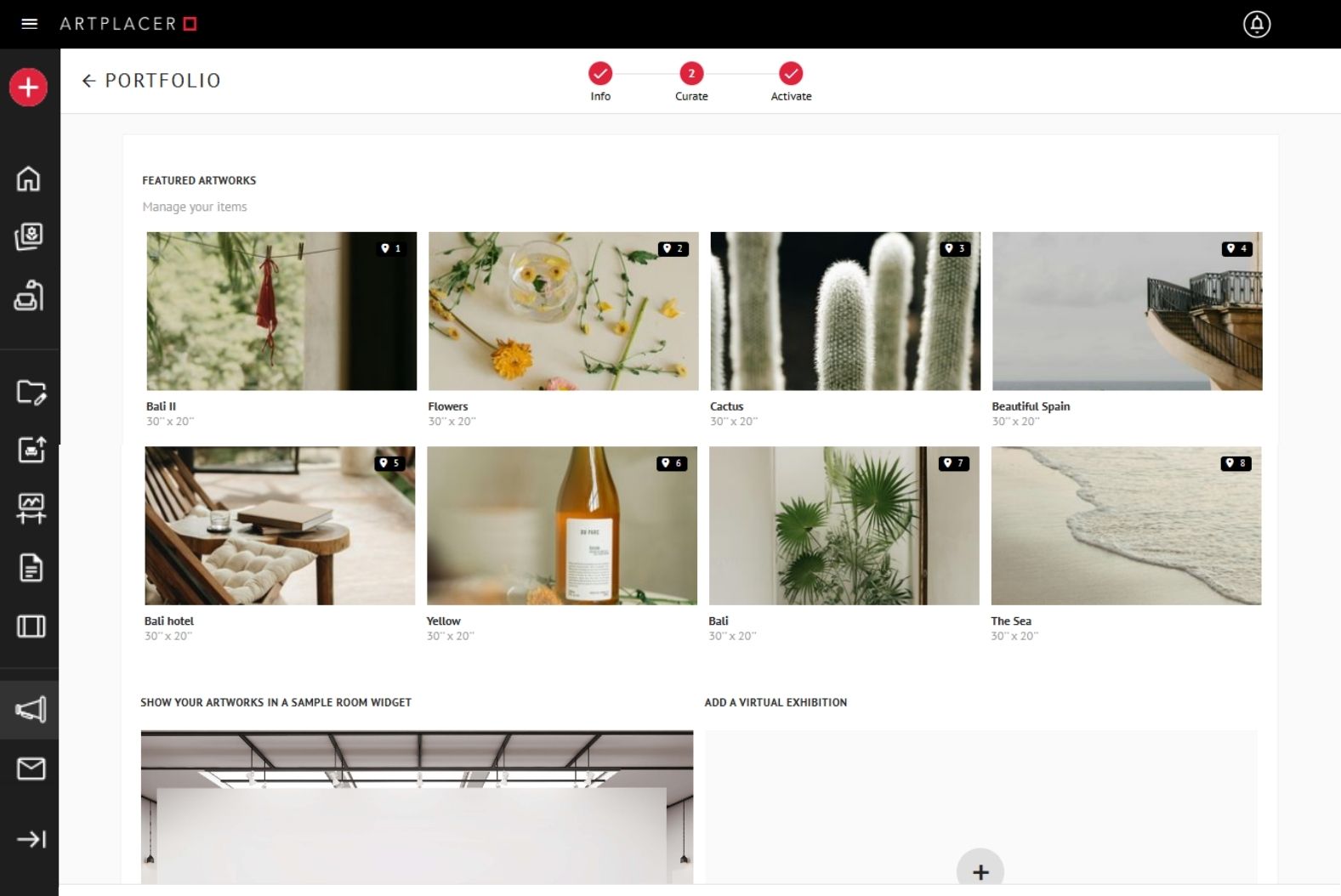
Creating your online portfolio with ArtPlacer only takes three steps: adding your info, curating your pieces, and publishing it. You can include Widgets and a Virtual Exhibition for an immersive visitor experience.
Curate your projects with intention
Your artwork is the heart of your portfolio, and the way you present it determines how viewers understand your practice. Strong presentation makes your work feel compelling, professional, and worth a closer look. Here’s how to make this section work for you:
Show only your best work
Think of your portfolio as a highlight reel. When determining what to include in an artist portfolio, remember that a small selection of strong pieces will always communicate confidence and clarity more effectively than a large collection of mixed results. Focus on the works that best represent your skill and style.
Use high-quality photos
Your images are doing the talking, so they need to be crisp, well-lit, and true to the real piece. Avoid shadows, distortion, and uneven color. A great photograph honors the time and care that went into the artwork and helps viewers experience it as accurately as possible. Get tips to take great photos here.
Keep your portfolio updated
Opportunities can appear unexpectedly, and having fresh work ready to share signals that you’re active and committed. Choose pieces that are available for purchase and those that have been a hit on other channels (for example, something that caught people’s eye on social media or exhibitions).
Add context where it matters
Images alone don’t tell the full story. Titles, dimensions, materials, and dates help viewers understand the work, while a short note or description can provide insight into the ideas behind it. These details show professionalism, and they save buyers and curators from having to track down information they need to evaluate or purchase your work, while presenting an artist portfolio that feels complete.
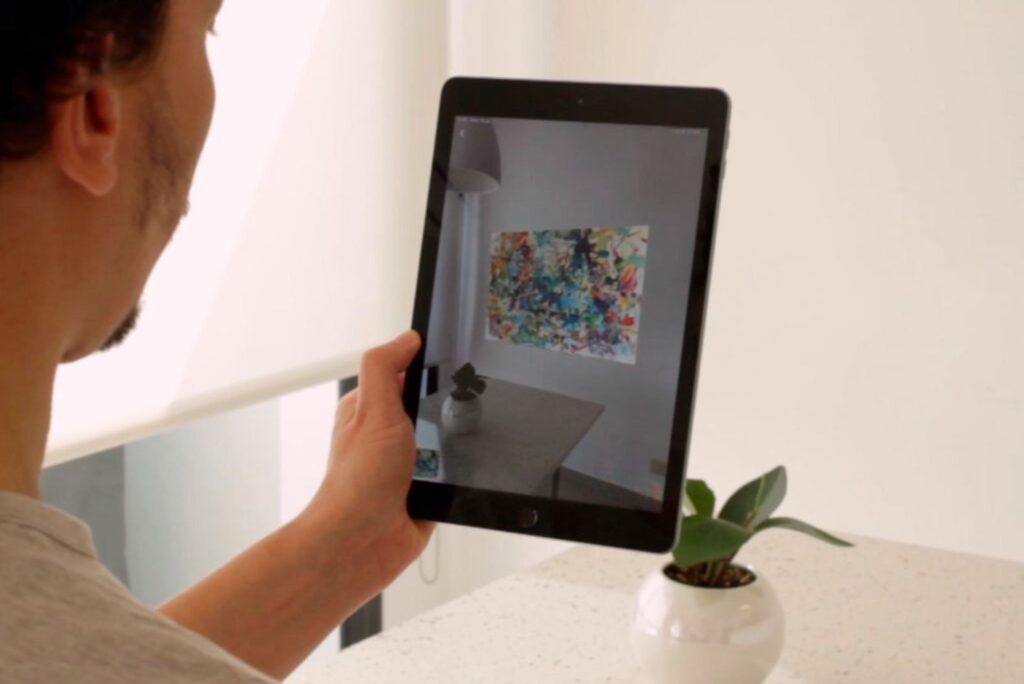
Invite your visitors to see your work in Augmented Reality to provide an immersive and interactive experience of your art.
A clean, elegant Online Portfolio to present your work
If you’re wondering how to create an artist portfolio, ArtPlacer’s Online Portfolio is the answer, as it’s designed to give artists a beautifully structured, public-facing space to showcase their work without the overwhelm of building a website from scratch. Hosted on the ArtPlacer Discover Site (a curated hub where artists, galleries, and collectors connect), your portfolio becomes instantly accessible to a wider audience looking to discover new art.
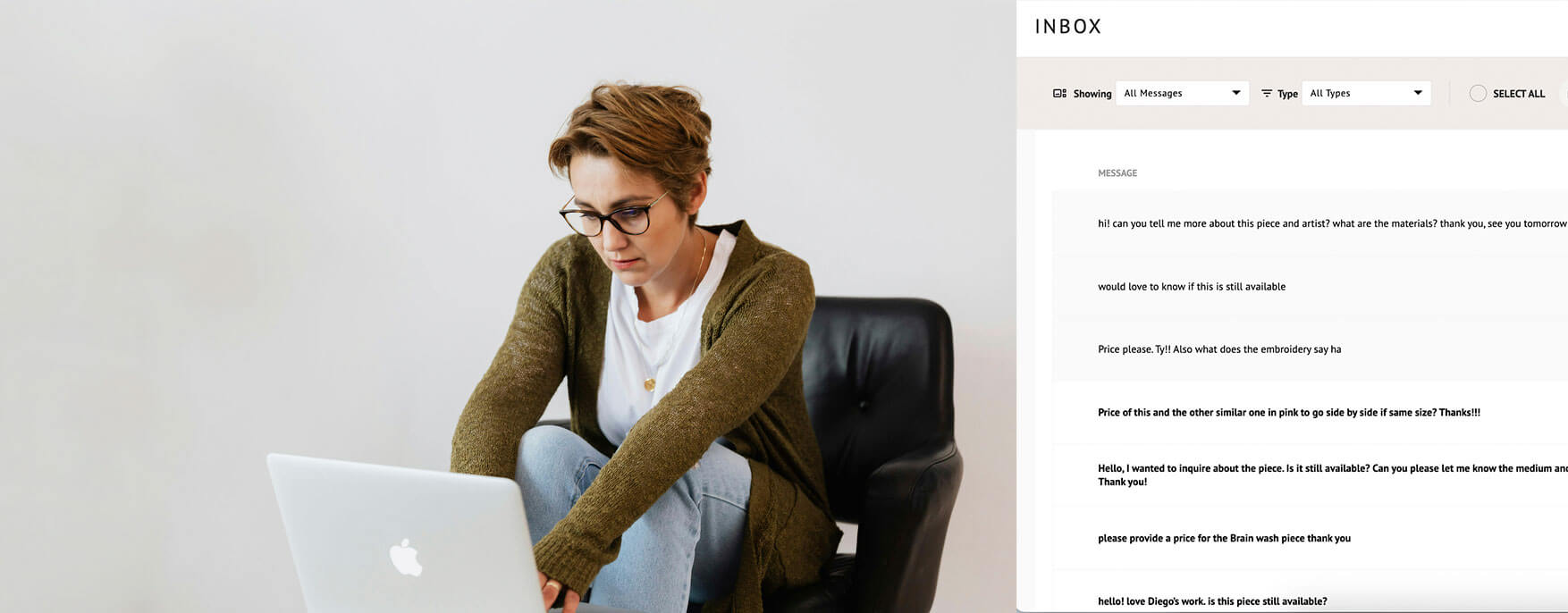
The layout of the Online Portfolio is intentionally clean and focused, so your artwork is always the main point of attention. Through it, visitors can submit a purchase request and reach out directly to inquire about the pieces: both their message and contact information are captured in ArtPlacer’s Inbox. That way, nothing goes unanswered, and you can use your Online Portfolio as a jumping-off point for sales and relationship-building.
Providing an experience that goes beyond just seeing images is an effective way to stand out to potential collectors and get them involved with your art directly, so ArtPlacer’s Online Portfolio incorporates exclusive features that elevate how your art is shared. For example, our Widgets can be added to your Portfolio. With “View in AR”, guests can see the work in Augmented Reality as if it were hanging in whatever room they’re standing in, directly from their phones. With “Try it in your room”, visitors simply upload a photo of the space where they’d like to see the artwork and get to play around with the display; and with “View in sample room”, they can see the piece hanging in a curated selection of Room Mockups. You can also invite visitors to discover selected pieces through a curated Virtual Exhibition, a 3D journey through a gallery-like space, and connect it to the portfolio. These elements intertwine to create a dynamic, immersive encounter with your work that gives a sense of scale and context and adds real-life weight to the viewing experience.
To see how artists are using their portfolios, here are a couple of examples worth exploring:
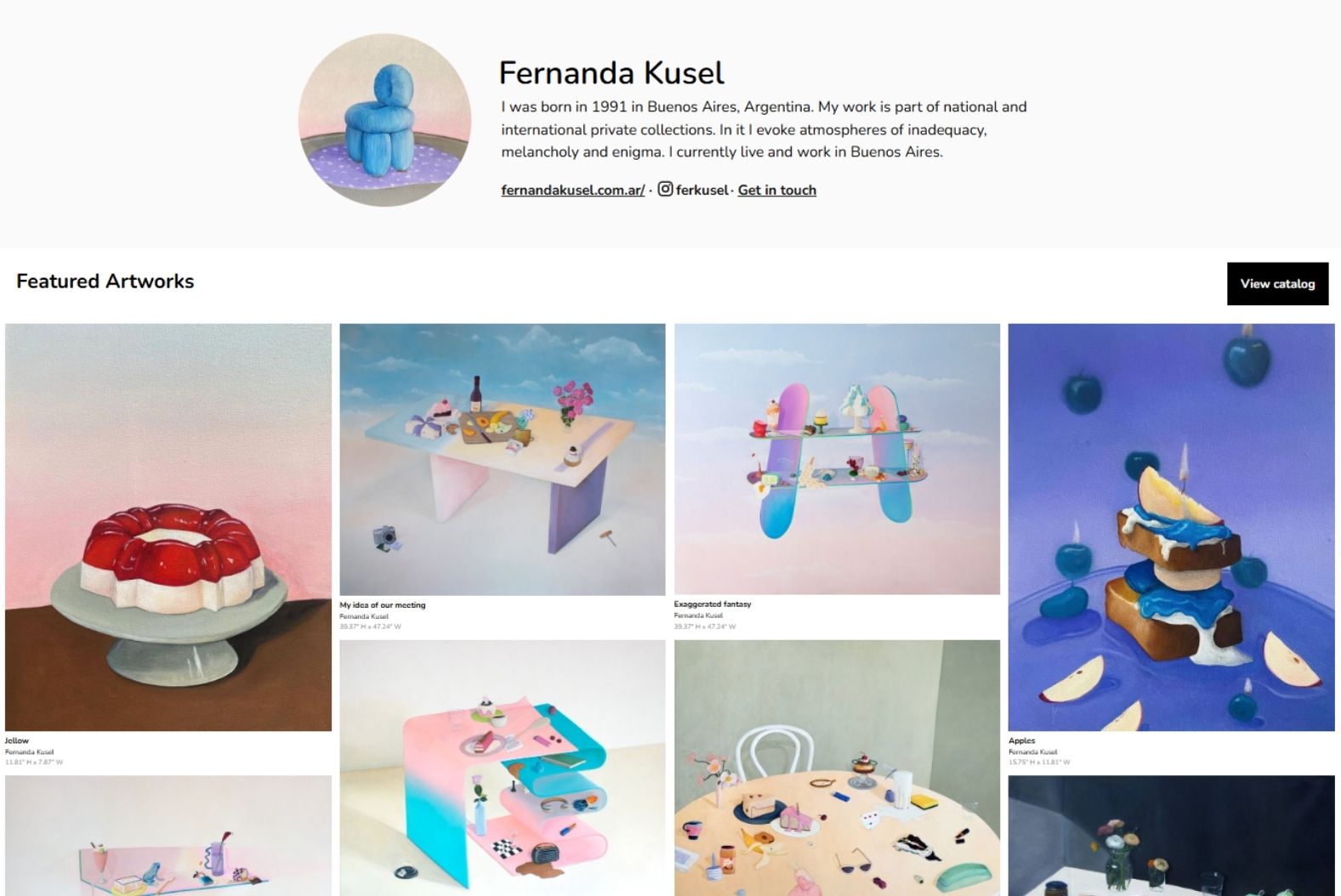
Fernanda Kusel, a visual artist whose portfolio highlights how strong imagery and clear structure work together to tell a cohesive story.
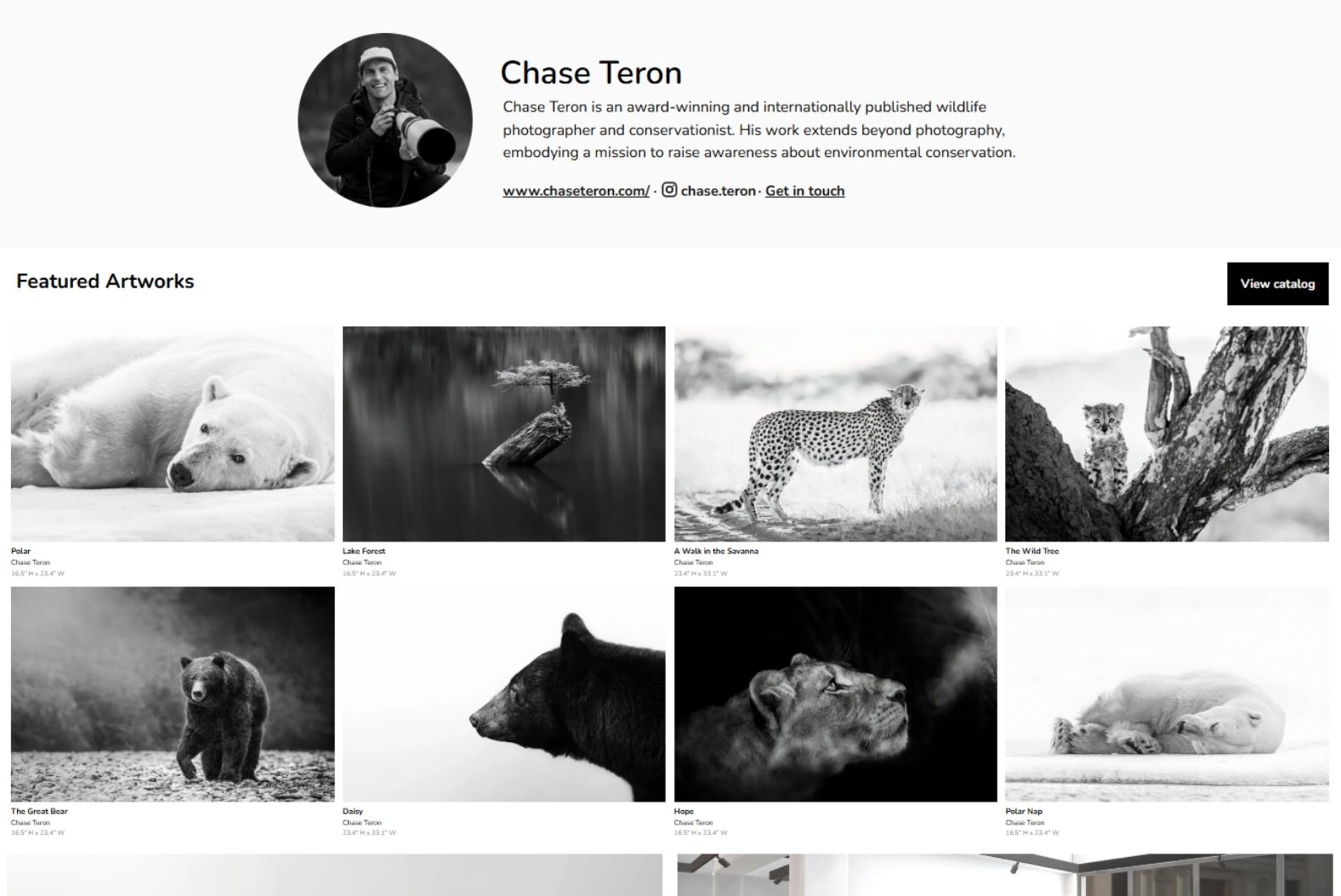
Chase Teron, a photographer who uses ArtPlacer’s tools to present his images with clarity while giving viewers an immersive sense of scale and presence.
Make it easy for people to reach you
A strong Online Portfolio doesn’t just show your work, it also makes it simple for people to contact you. Clear, accessible contact information removes friction for potential buyers, curators, or collaborators who want to start a conversation: you got their attention with your work, now make sure they can easily connect with you.
Include the essentials
A complete profile should give people multiple ways to connect with you. Make sure the basics are always up to date:
- Your email
- Social links (especially Instagram and your website)
- Relevant location details
- A phone number, if you’re comfortable sharing one
These small details build trust and help visitors feel confident reaching out.
Keep communications organized
ArtPlacer’s Inbox brings all inquiries from your Online Portfolio into one central space, making it easier to stay on top of conversations. All interactions from your portfolio are stored together, so nothing gets lost.
You can respond directly from the Inbox, see the full history of past exchanges, and automatically build your contact list as new people reach out. Tags and statuses help you keep track of who’s who, which is especially useful when you’re juggling multiple leads or planning follow-ups.
Leverage your contacts list
Every new inquiry from your Online Portfolio is added to your Contacts section, giving you a record of who has engaged with your work. This makes it easier to recognize returning visitors, nurture relationships, and build a network of potential buyers over time, making it simple to manage the admin side of your practice.

Through your Online Portfolio, you can create contacts and build relationships. ArtPlacer makes it easy to follow up and stay in touch.
Share your Online Portfolio everywhere
Once your portfolio is polished and ready, the next step is making sure people actually see it: promoting it is a key part of any successful online portfolio. Visibility matters, and a few strategic placements can help your work reach the audiences who are most likely to connect with it.
–ArtPlacer’s Discover Site: Enabling the Discover setting puts your portfolio in front of people actively browsing for new artists, giving you built-in exposure to an engaged art-viewing community.
–Email signature: Adding your portfolio link to every message you send turns routine communication into a simple, consistent way for people to explore your work.
–Artist blog: Whenever you share studio updates, insights, or behind-the-scenes posts, include a subtle mention of your portfolio to guide readers toward your full body of work.
–Social media: Use your bio link or link-in-bio tools to direct followers to your portfolio so they can go beyond your feed and see your work in context.
–Newsletter: Include a clear prompt to visit your portfolio in each newsletter, so subscribers have an easy path from your stories to your artwork.
–Virtual Exhibitions: Add your portfolio link to the description or brochure of any Virtual Exhibition so viewers can explore more of your practice.
–As a QR code: Going to a fair? Display a QR code at your booth that links to your portfolio, making it effortless for visitors to take your work with them digitally and revisit it later.
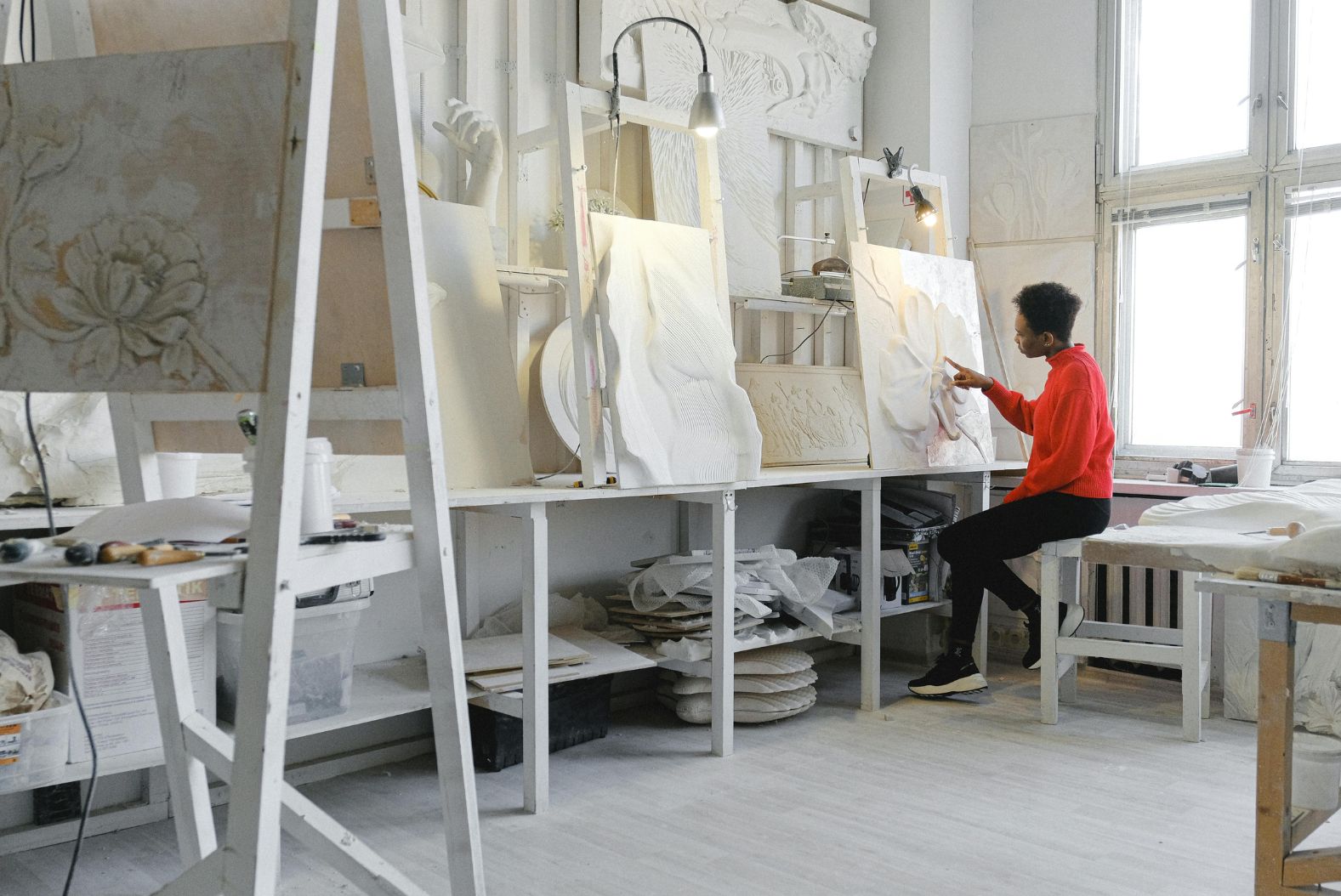
As you create work, your Online Portfolio evolves with you. Keep it updated to show your latest and greatest pieces.
An evolving space for your work
At the end of the day, the more people who encounter your work, the greater the chance it resonates with the right collectors. This online space gives you a professional, easy-to-update space where your art can truly stand out, and understanding how to maintain an artist portfolio over time is just as important as creating it. What matters most is having a place you can refine, reorganize, and expand as your practice evolves.
Whether you’re polishing an existing portfolio or building one from scratch, ArtPlacer’s Online Portfolio helps you create a clear, compelling showcase that supports your long-term career and makes engaging with your work effortless for your audience. Try it now, and give your artwork the setting it deserves.