Art Marketing
How artists are building a thriving online market without a gallery

There is a version of an art career that most emerging artists grew up believing in: the gallery visit, the group show, and getting representation. It is a model that still works… for some. But now, artists are discovering that it’s possible to sell art online without a gallery, building the audience, credibility, presentation, and sales infrastructure independently with the right tools.
Two tools in particular have emerged as complementary pillars of this new model: Catawiki, the expert-curated global auction marketplace, and ArtPlacer, the presentation and visualization platform that helps artists show their work in the context buyers actually need to see it. Used together, they address the two core challenges every emerging artist faces online: being found by the right buyers and being trusted once you’re found.
Contents
What a 30-year tech career taught one painter about selling art online
Sonia Jerónimo knows both challenges well. A contemporary abstract artist working between fine art and architectural space, she creates large-scale, materially rich paintings that explore how colour, texture, and depth transform the atmosphere of an interior. Her work is collected internationally and shown in exhibitions, art fairs, and architectural environments, where painting is conceived not only as a visual object but as something that shapes how a room feels.
What makes her path unusual is what came before it. Jerónimo spent more than three decades in the technology industry, working at the executive level in international companies. After a long career defined by strategy, leadership, and high-pressure decision-making, she walked away and started painting full-time.
“Painting became both a transformation and a return, a way of moving from strategy and pressure into intuition, materiality, and freedom. That shift still informs my work today.”
It’s a story that reframes what it means to build an art practice from scratch. And it informs Jerónimo’s clear-eyed perspective on the online art market: the tools, the platforms, and the infrastructure.
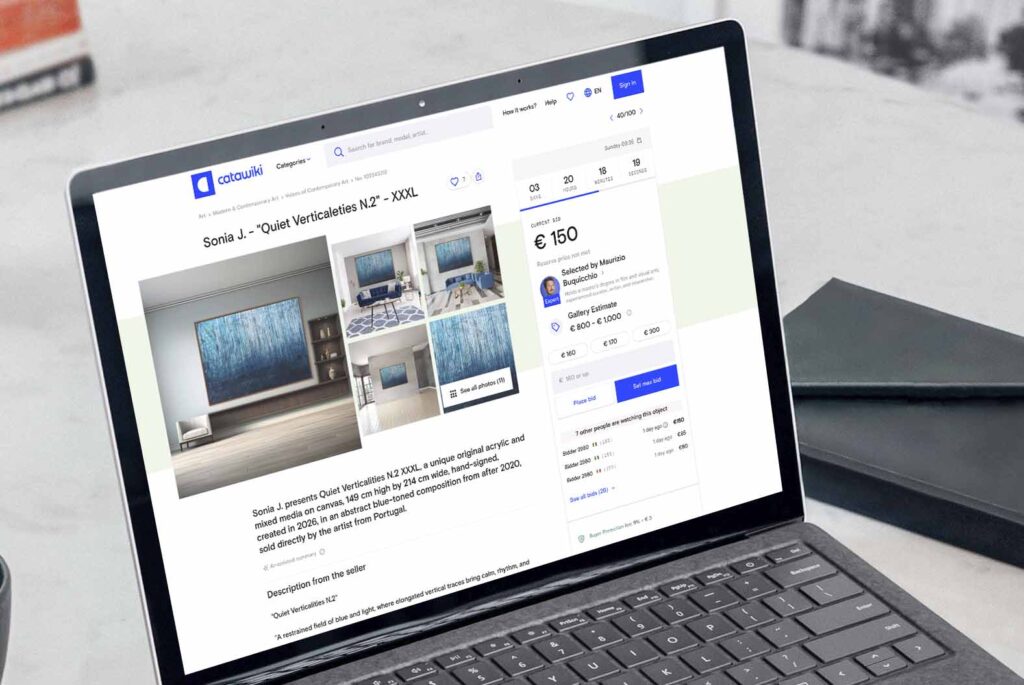
Sónia Jerónimo combines ArtPlacer and Catawiki to increase her presence and sales.
How to sell art online as an emerging artist: where to start
The first problem any artist selling online faces is not the quality of their work; it’s getting the right people to see it. The internet is saturated with art. Marketplaces are full of listings. The challenge is not being visible, but being visible to people who are genuinely ready to buy, in an environment that communicates that your work is worth collecting.
Why expert curation gives your art credibility with online buyers
Catawiki was built around a simple answer to that problem: expert curation at scale. Every object submitted to the platform is reviewed by one of the more than 240 in-house specialists before it reaches a buyer. For artists, this is not a bureaucratic hurdle but a credibility signal. When a collector sees a piece on Catawiki, they know it has been vetted by experts. That context changes how they evaluate what they’re looking at.
The numbers behind the platform reflect the seriousness of its audience. Catawiki attracts 10 million monthly unique visitors across more than 60 international markets, with particularly strong collector communities in Italy, France, Spain, and the Netherlands; markets that are genuinely difficult for an emerging artist to access without physical gallery representation. The platform’s buyers are also unusually cross-category: on average, a Catawiki buyer bids across four different categories, which means artists are regularly discovered by collectors who arrived looking for something else entirely.
For Jerónimo, finding a way to sell art online without a gallery and moving into the auction format meant rethinking how she communicates her work entirely:
“The curated online auction format has made me much more precise in how I present my work. In a traditional gallery, the physical encounter does a lot of the work: scale, texture, surface, and presence are immediately felt. Online, those qualities have to be translated with much more discipline.”
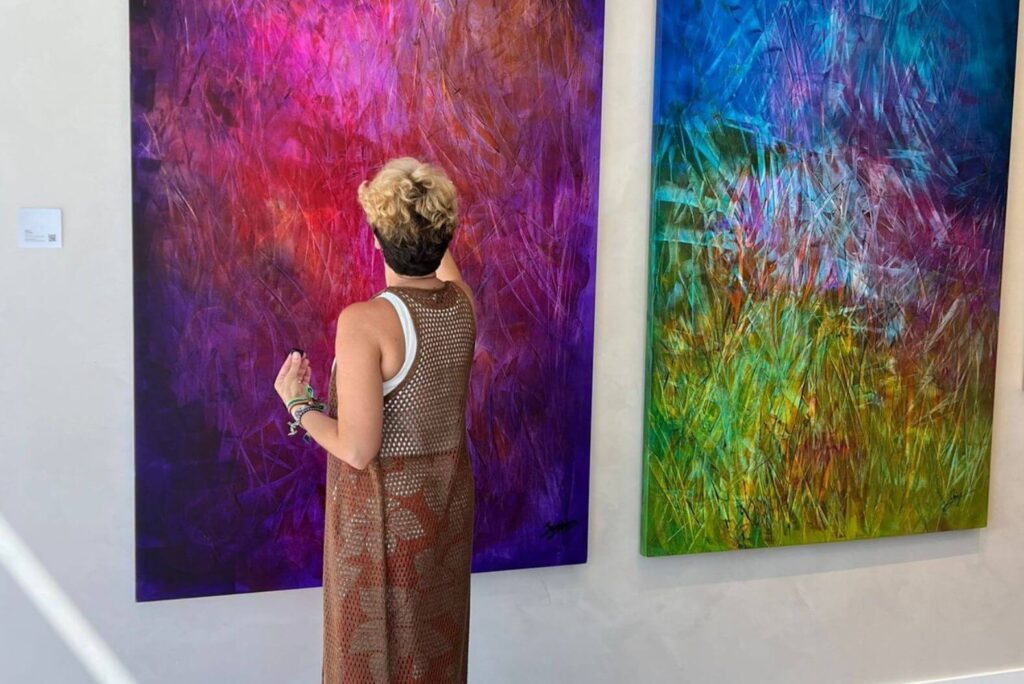
For Sónia’s large, abstract pieces, a presentation that displays the work in context is essential to convey a proper sense of scale.
The observation gets to something true about selling abstract painting online, specifically. Without physical presence, the work has to speak differently.
“The online format rewards artists who can communicate not only what the work looks like, but what it does, how it feels in space, how it lives with light, and why its material presence matters. In that sense, it pushes artists to become clearer and more intentional.”
Unlike many platforms that offer a single selling format, Catawiki provides three distinct moments to convert: the live auction, a Buy Now option, and an After-Sales process that captures interest from bidders who didn’t win. An artwork can go from submission to sold in as little as ten days.
From submission to sold: how Catawiki’s auction format works
The commission structure also deserves attention. Where traditional galleries take up to 50% of a sale, Catawiki charges a seller success fee of 12.5% (excluding VAT) plus a small fixed amount per lot. For artists doing the math on their first few sales, the difference is significant.
Beyond the transaction, Catawiki invests in the storytelling around its artists. Works are featured in guest-curated collections and “Solo Shows,” and the platform has built editorial partnerships with publications including Monopol Magazine, Artribune, and Beaux Arts Magazine, giving artists a pathway to press coverage they would otherwise have to earn on their own.

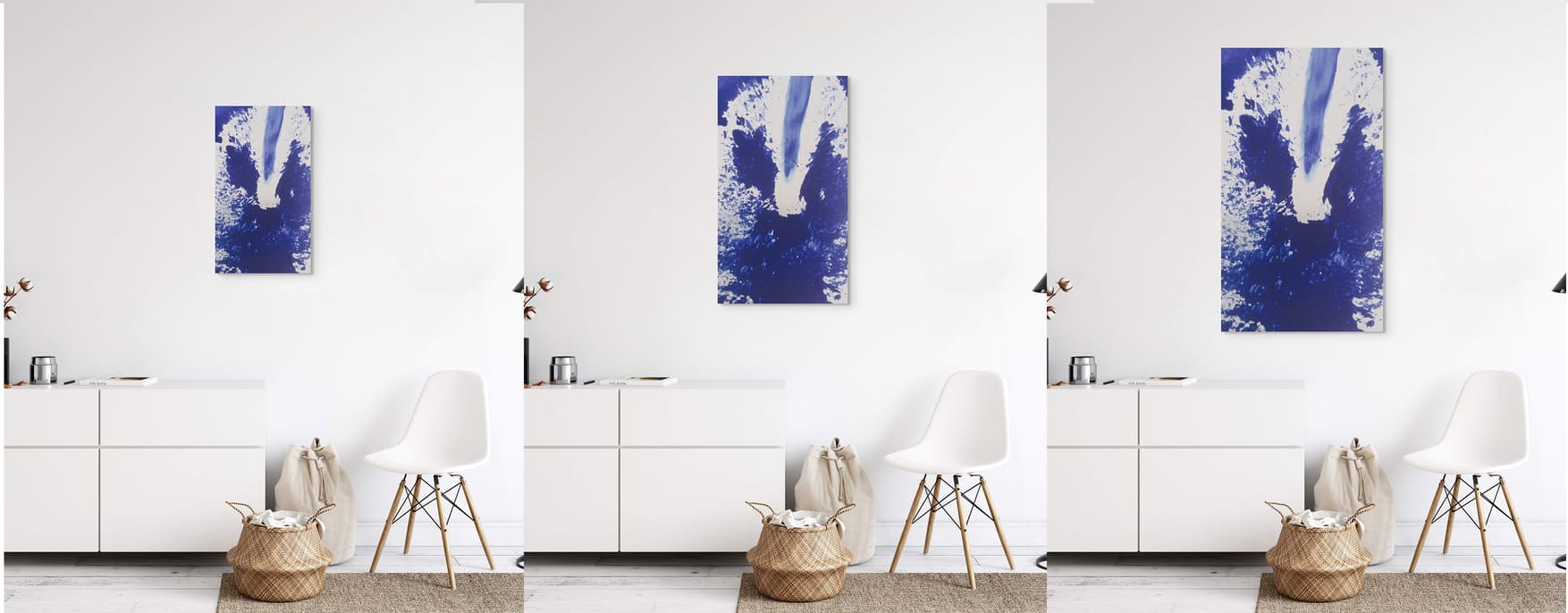
ArtPlacer helps you differentiate your listings with Room Mockups that present your art in context. Choose the perfect one to highlight your art from an extensive library of styles and aesthetics.
Make collectors feel your work with Room Mockups
Getting in front of collectors is only half the challenge. The other half is what happens the moment they encounter your work: the window of attention between curiosity and commitment when the sale is made or lost.
This is where most online art sales fall apart. A JPEG on a white background tells a collector very little about what it would actually feel like to live with a piece. Scale becomes abstract, context disappears, and there’s no emotional connection.
Room Mockups for artists: the tool that turns browsers into buyers
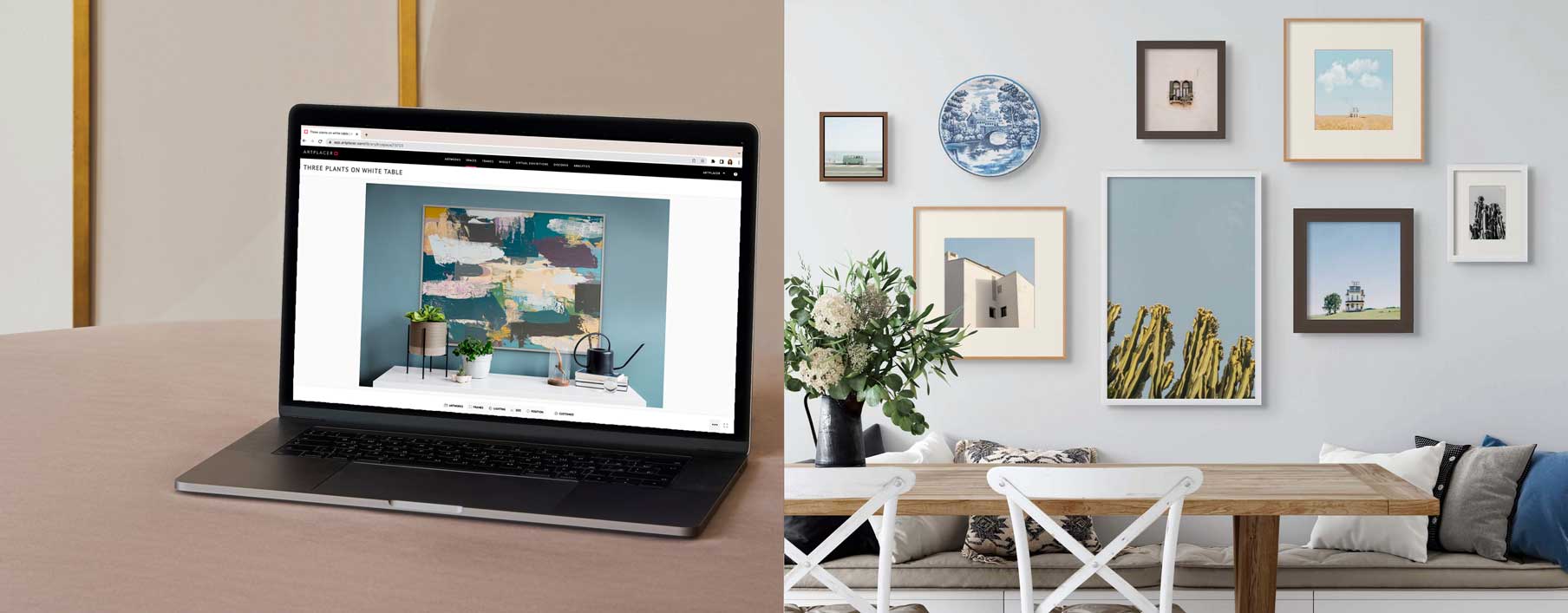
ArtPlacer’s core tool, a room visualizer that places artwork into real interior settings, gives buyers the spatial and emotional context that a studio photograph cannot. An artist can show their work hanging in a living room, a hallway, or above a dining table. The scale reads correctly and the colors respond to the environment. The buyer stops imagining and starts seeing.
For Jerónimo, whose paintings are conceived specifically in relation to the spaces they inhabit, ArtPlacer is less a marketing tool than a natural extension of the work itself:
“I use ArtPlacer as a bridge between the studio and the final environment where the work will live. It helps me visualise how a painting functions in real interiors and allows collectors, designers, and clients to understand scale, proportion, and atmosphere much more quickly.”
That clarity directly affects how conversations develop. For an artist working at the intersection of painting and architecture, the ability to show rather than describe transforms client relationships. Conversations become more concrete, and decisions happen faster.
Why presenting your art online professionally matters
ArtPlacer also helps beyond the listing image. The platform serves as a full professional presentation suite for artists who don’t yet have a gallery doing that work for them. Instead of sending a collector a folder of images, you send a curated, beautifully presented selection of works organized, branded, and easy to navigate. The difference in how collectors respond to that kind of presentation versus an email attachment is significant. It signals that you take your practice seriously, and that travels faster and further than any bio or CV.
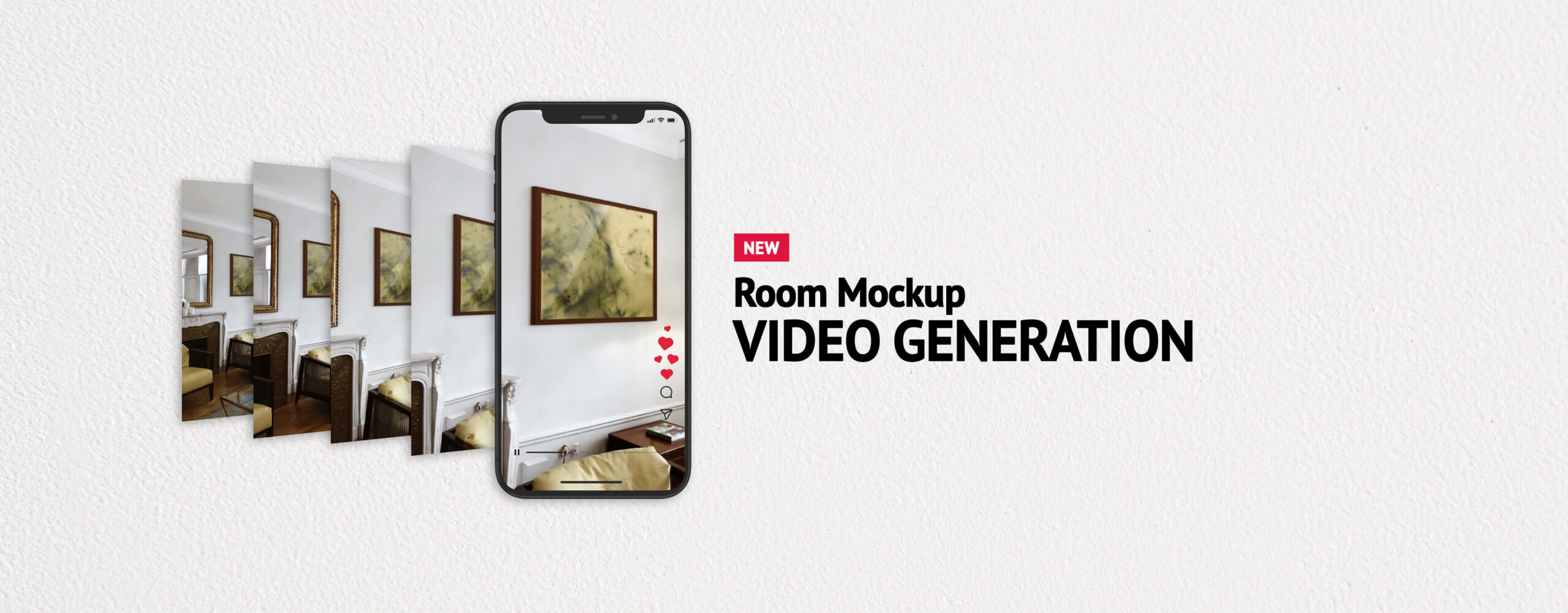
Still and video Room Mockups also perform exceptionally well as social content. Artists consistently find that art wall mockups generate far more engagement than artwork shots alone. Collectors save them. They share them. They arrive at a Catawiki auction having already seen the work in a room that looked like theirs. The presentation has done its job before the bidding even begins. That shift in register is where auctions are won.
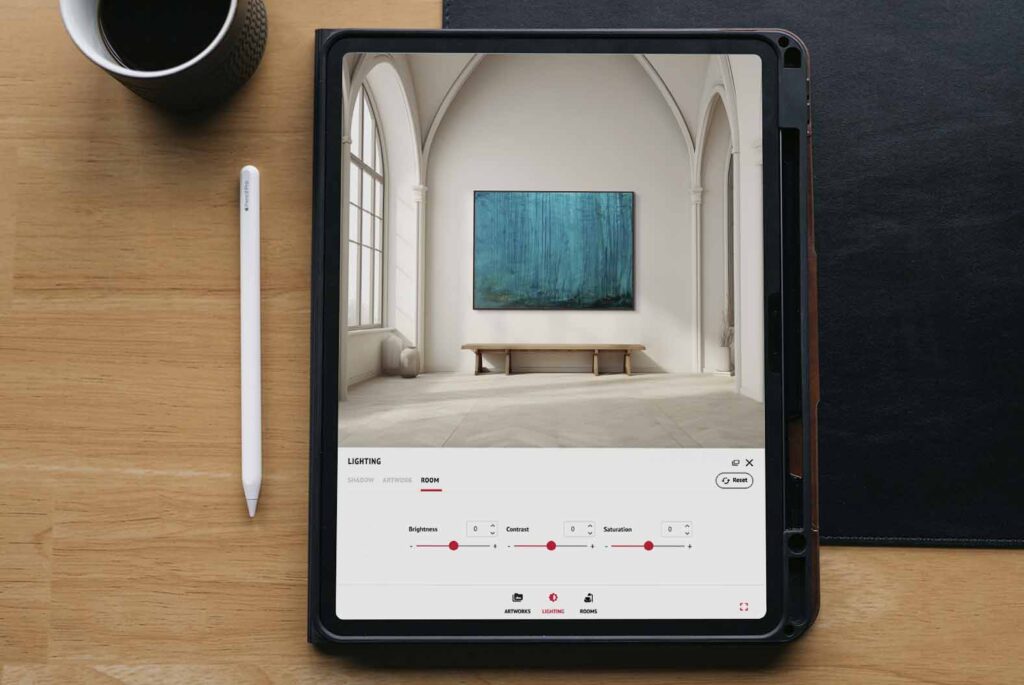
Edit your Room Mockups to best fit your piece. Adjust framing, matting, lighting, shadows, and even the glass reflection for an immersive presentation.
The tools independent artists are using to sell art online in 2026
Combining Catawiki and ArtPlacer is simple and worth articulating clearly, because it reflects something true about how the online art market actually works.
Catawiki solves the distribution problem: it puts your work in front of a large, curated, internationally diverse audience of people who are actively looking to buy. ArtPlacer solves the presentation problem: it gives those buyers the context, scale, and visual story they need to feel confident making a decision.
Think of it this way: the combination of Catawiki and ArtPlacer lets collectors discover you and builds trust so they actually buy your work.
ArtPlacer’s Room Mockups are perfect for your listing images. When an artist uploads a Catawiki lot, the images they choose are competing directly with dozens of other works in the same auction. A piece hung in a carefully chosen interior, scaled correctly, and framed intentionally stops the scroll in a way a flat studio shot rarely does.
A collector browsing Catawiki who encounters a listing where they can already see the work in a room is not just looking at art anymore: they’re imagining ownership. This change makes all the difference when it comes to buying.
Jerónimo describes the relationship between the two platforms with the precision of someone who has thought carefully about both:
“A platform like Catawiki creates access, visibility, and transaction opportunities. But visibility alone is not enough, especially for contemporary abstract work, where buyers often need help understanding scale, context, and emotional fit. One platform supports discovery and sales, while the other strengthens presentation, confidence, and storytelling.”
For artists working and looking to sell art online without a gallery, she adds, that combination is not just useful, it is strategic. “The more serious the collector, designer, or client, the more they need clarity,” Jerónimo explains. “Strong storytelling and strong visualisation reduce friction and increase the likelihood of a decision.”
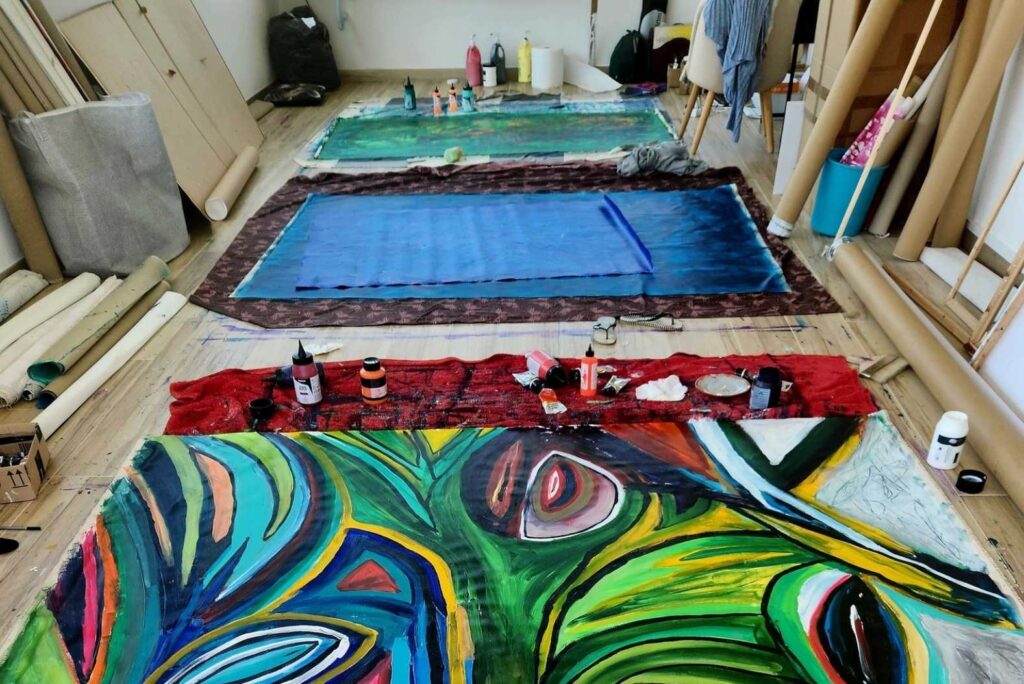
Sónia’s practice is highly tactile and analog. Catawiki and ArtPlacer help her bring that feeling into the online marketplace in a way that’s true to her work.
Reach the global marketplace with Catawiki and ArtPlacer
For artists new to these two platforms, here’s a step-by-step with some tips to get started on presenting and selling your art to a new audience:
How to get started with Catawiki
– Create your account and submit your work for review by one of the platform’s in-house experts.
– Receive guidance on pricing, presentation, and whether it’s a fit for the current market as part of the review process.
– Use the feedback to refine your submission; artists who apply the experts’ notes tend to see better results faster.
– When uploading your first lot, mention ArtPlacer to unlock a personalized onboarding call if your work is selected, giving you a direct line to expert guidance from the start.
How to get started with ArtPlacer
– Sign up with code CATAWIKI for an exclusive discount: 15% off a monthly plan for the first three months, or 30% off an annual plan for the first year.
– Upload your catalog and begin experimenting with the Room Mockups: there’s an extensive library of styles and aesthetics to choose from.
– Use your Room Mockup creations for your Catawiki listing images, buyer communications, and social media content to elevate your presentation and increase sales.
Catawiki and ArtPlacer handle the infrastructure. You just have to show up and keep making the work.
Sonia Jerónimo’s work is available on Catawiki.
Note: This interview has been edited for length and clarity.